
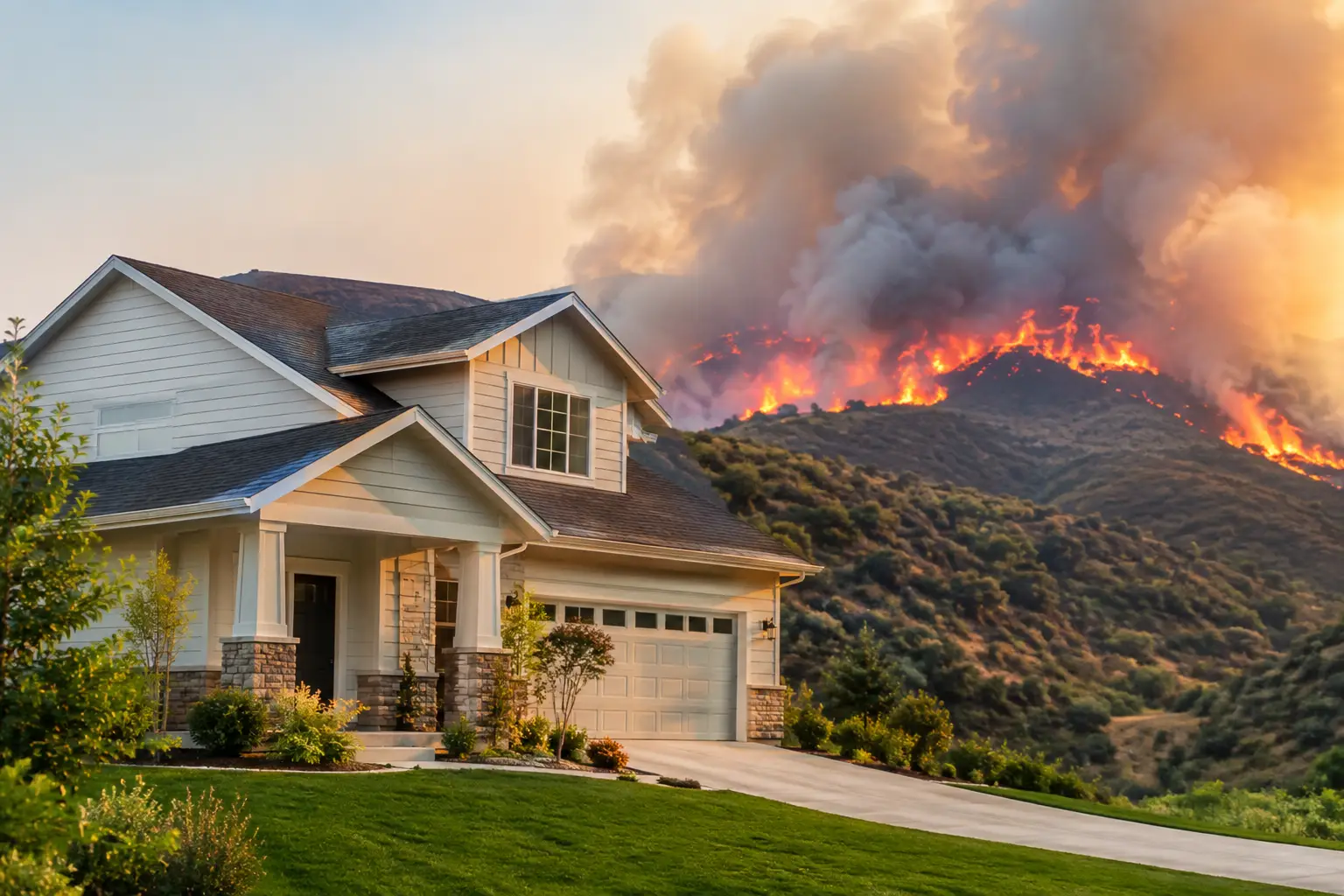
A wildfire does not pause at a property line to check whether a policy is complete. For California homeowners, the search for the best California wildfire coverage is not really about finding a single policy with the lowest premium. It is about building protection that can respond to the actual financial consequences of a fire: rebuilding the home, replacing possessions, maintaining a place to live, and protecting the household from related liability exposure.
That distinction matters because wildfire insurance availability, deductibles, underwriting standards, and policy forms can vary sharply by location. A strong protection plan begins with a clear view of what the home would cost to rebuild and where a standard homeowners policy may leave gaps.
What Best California Wildfire Coverage Should Protect
The right coverage structure starts with the residence itself. Your dwelling limit should reflect the estimated cost to rebuild the home after a total loss, not its market value, mortgage balance, or purchase price. In high-risk areas, rebuilding costs can rise quickly after a widespread fire as labor, materials, permits, and contractor demand all tighten at once.
A dwelling limit that looked reasonable a few years ago may no longer support a full rebuild. Review it regularly, especially after renovations, additions, upgraded finishes, or changes in local construction costs. Ask whether the policy includes replacement cost coverage and whether extended replacement cost is available. Extended replacement cost may provide an additional amount above the stated dwelling limit when a covered loss drives rebuilding costs beyond expectations. It is not unlimited protection, but it can be a valuable layer of resilience.
Other structures deserve the same attention. Detached garages, guest houses, fences, retaining walls, sheds, pools, and hardscaping may have separate limits or specific exclusions. A home with meaningful outdoor improvements can be underinsured even when the main residence is properly valued.
Personal property coverage should also be examined in practical terms. Consider furniture, electronics, appliances, clothing, art, tools, collectibles, and the contents of garages or storage areas. A detailed inventory, supported by photos and receipts where possible, can make a claim substantially easier to document after a loss.
The Coverage Layers That Matter After a Fire
Wildfire protection is strongest when the policy is evaluated as a system rather than a single declaration page. The following elements work together to protect a household after a covered loss:
- Dwelling coverage pays toward repair or reconstruction of the insured residence, subject to the policy terms and limits.
- Other structures coverage addresses qualifying detached structures and certain property features on the premises.
- Personal property coverage helps replace belongings damaged or destroyed by a covered fire.
- Loss of use coverage can help pay for additional living expenses when a covered loss makes the home uninhabitable.
- Personal liability coverage may respond if a household member is legally responsible for covered injury or property damage to others.
Loss of use is often underestimated. After a major fire, temporary housing may be necessary for months rather than weeks. Hotel stays, rental housing, increased food costs, laundry, storage, pet boarding, and transportation can add up quickly. The limit should be considered in light of local rental costs, family size, pets, and the likely duration of reconstruction in a region affected by a large event.
Liability coverage belongs in the broader architecture of protection as well. A property fire can create complicated questions when smoke, embers, or other conditions affect neighboring property. Coverage depends on the facts, legal responsibility, and policy language, but a household should not treat liability limits as an afterthought. A personal umbrella policy may provide an additional layer above qualifying underlying home and auto liability policies for families with substantial assets or higher exposure.
Standard Homeowners Coverage, the FAIR Plan, and Gap Protection
Some California property owners can obtain wildfire coverage through a standard homeowners policy. Others may face restricted availability, nonrenewal, narrower terms, or a need to use the California FAIR Plan as part of their solution. These circumstances require careful policy coordination.
The California FAIR Plan can provide an important property insurance foundation when coverage is difficult to obtain elsewhere. However, it generally should not be assumed to offer the same breadth of protection as a comprehensive homeowners policy. Depending on the selected form and endorsements, a FAIR Plan policy may focus on fire-related property protection while leaving important exposures, such as personal liability, water damage, theft, or broader living-expense protection, unaddressed or limited.
That is why many homeowners need a companion policy, sometimes called a difference in conditions policy, to address gaps not handled by the FAIR Plan. The design must be coordinated. Limits, deductibles, covered property, and claims responsibilities should be understood before a loss occurs. Two policies do not automatically equal complete protection if their terms fail to align.
For homeowners using a layered arrangement, the central question is simple: if a wildfire damages the property tomorrow, which policy responds to the structure, belongings, temporary housing, liability exposure, and any non-fire damage that occurs during recovery? If that answer is unclear, the protection structure needs review.
Deductibles Can Change the Value of a Claim
Wildfire deductibles are not a minor line item. In some policies, the deductible may be a percentage of the dwelling limit rather than a fixed dollar amount. On a home insured for $1 million, a 5% deductible could leave the homeowner responsible for $50,000 before insurance begins paying on a covered wildfire loss.
The deductible may apply only under defined wildfire conditions, such as a fire declared by a government authority or a fire occurring within a stated proximity. Policy wording controls. It is essential to understand the trigger, the percentage or dollar amount, and whether the deductible applies separately to other structures and personal property.
A higher deductible can reduce premium costs, but it transfers more financial responsibility back to the homeowner at the moment a catastrophe occurs. The right choice depends on available savings, cash flow, rebuilding exposure, and comfort with retaining that portion of the loss. A deductible should be funded by a realistic reserve, not an assumption that the household will figure it out later.
Underwriting Is Part of the Protection Plan
California insurers increasingly evaluate a property’s wildfire characteristics in detail. Distance to combustible vegetation, roof material, siding, access roads, slope, nearby brush, fire department proximity, and neighborhood concentration can affect eligibility and pricing.
Risk mitigation can improve the property’s defensibility and may support better insurance outcomes, though it does not guarantee availability or lower premiums. Maintaining defensible space, clearing combustible debris from roofs and gutters, using ember-resistant vents where appropriate, and keeping access routes visible and clear are practical steps that protect both the property and the people who may respond to an emergency.
Document these improvements. Keep photographs, invoices, inspection records, and receipts. Underwriting decisions are made from property information, and accurate documentation gives the insurance conversation a stronger factual foundation.
How to Evaluate Your Coverage Before Fire Season
Start with the declarations page, but do not stop there. Confirm the dwelling limit, deductible, coverage for other structures, personal property valuation method, and loss of use limit. Identify whether personal property is covered at replacement cost or actual cash value. Actual cash value accounts for depreciation, which can leave a meaningful gap when replacing older belongings.
Then examine endorsements and exclusions. Ordinance or law coverage can be especially relevant after a substantial loss because rebuilding may require compliance with current building codes. Consider whether the available limit would be enough for your property and jurisdiction. Review limits for valuable items separately, since jewelry, art, firearms, collectibles, and certain electronics may have sublimits unless specifically scheduled.
Finally, look beyond the home. Vehicles damaged by wildfire are generally protected by comprehensive physical damage coverage, not by liability-only auto insurance. Make sure the household’s auto, home, and personal umbrella policies fit together as one coordinated protection design.
Best California Wildfire Coverage Is Designed, Not Assumed
There is no universal policy that earns the label of best for every California home. A coastal residence, a foothill property near open space, and a suburban home in a recently reclassified fire area can face very different availability and coverage challenges. The right answer depends on the home’s rebuild cost, location, construction, financial resources, and the protection already in place.
Shield Pro Insurance approaches this work as the architecture of protection: identifying the exposures that matter, testing the limits and exclusions that shape a claim, and organizing policies to support the life and assets behind them. The goal is not simply to have a policy in force. It is to have a structure that can stand when a wildfire turns an ordinary day into a major financial event.
Before the next period of elevated fire risk, set aside time to review the protection around your home with the same care you would give to maintaining the home itself. A clear answer now is far more valuable than a difficult discovery after the smoke has cleared.