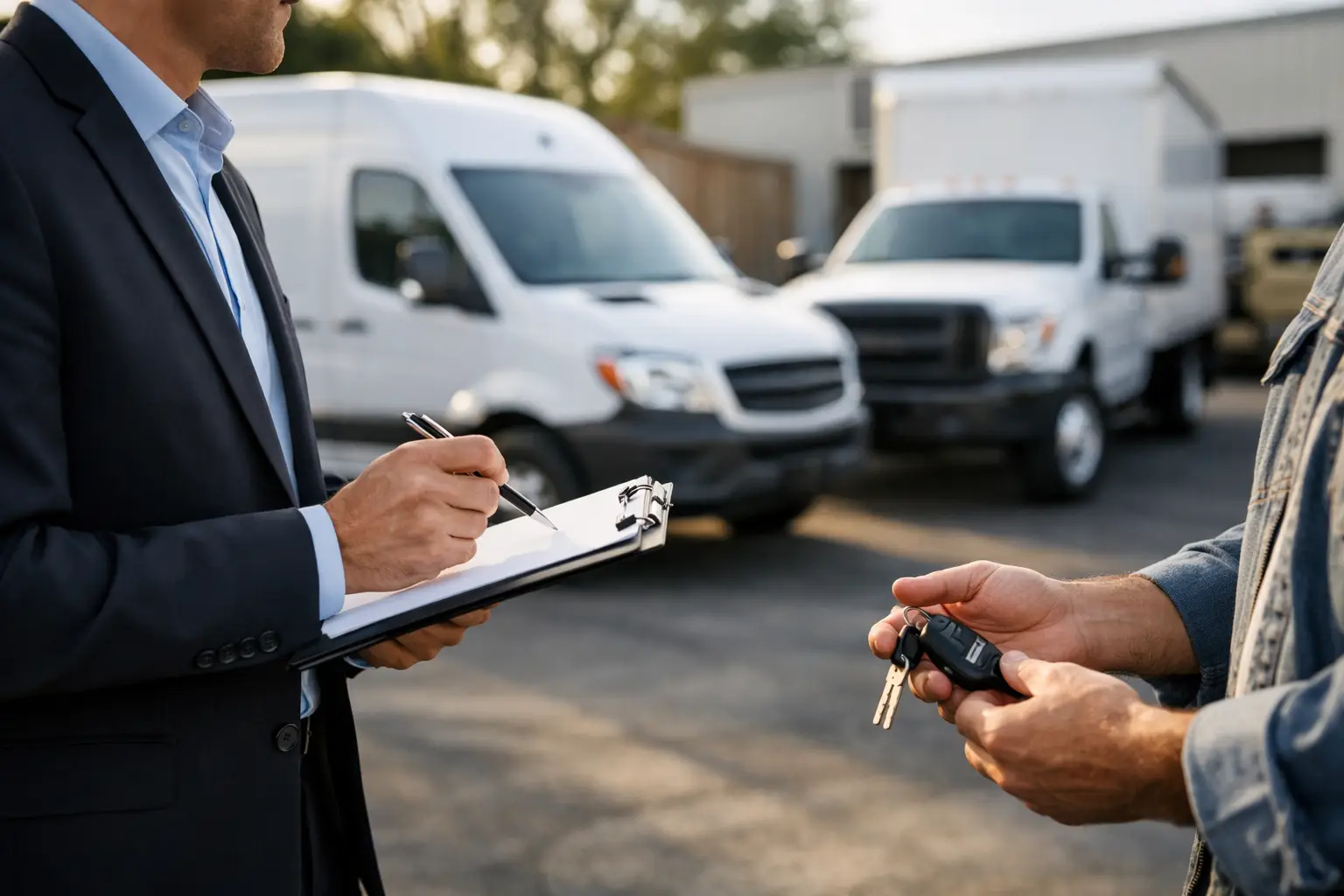
A service van backs into a customer’s gate. An employee is rear-ended while carrying tools to a job. A personal pickup is used to make one urgent delivery and then causes a serious injury crash. Each event begins with a vehicle, but the financial exposure can extend far beyond repairs. Commercial auto insurance small business owners select should be designed around how vehicles, drivers, and daily operations actually function.
For a small company, a vehicle is rarely just transportation. It may carry inventory, equipment, employees, or the company’s name. It can be central to revenue, customer service, and job-site access. That makes auto coverage a foundational part of the architecture of protection, not a policy to select by monthly premium alone.
Commercial Auto Insurance Small Business Owners Can Design
The right coverage structure begins with a clear inventory of exposure. Start with titled vehicles, but do not stop there. A contractor’s van, a florist’s delivery vehicle, a real estate team’s leased SUV, and a restaurant’s employee-owned delivery car create different liability, physical damage, and operational concerns.
A strong review asks practical questions. Who drives? Are vehicles owned, leased, rented, or borrowed? Do employees use their own cars for errands, deliveries, or client visits? Are tools or goods regularly carried inside? Does a vehicle cross state lines, pull a trailer, or operate in congested urban areas? The answers shape the coverage design.
Liability coverage is often the central decision. It responds when a covered driver causes bodily injury or property damage to others. State-required minimums may satisfy a legal threshold, but they can be poorly aligned with the cost of a serious crash. Medical treatment, lost income claims, legal defense, and multiple injured parties can exhaust low limits quickly.
Choosing a higher liability limit does not eliminate risk, but it creates more room between an accident and the company’s assets. The appropriate level depends on factors such as vehicle use, payroll, revenue, driving territory, contract requirements, and the value of property that could be exposed after a claim. A business that operates one sedan locally has a different profile from a company with several loaded vans on the road every day.
Build Coverage Around the Vehicle, Not Just the Driver
Auto policies generally combine several protection elements. Their value depends on how they work together after a loss.
Liability coverage addresses damage or injury caused to others. Physical damage coverage, including collision and comprehensive coverage, helps protect the company’s own vehicles after crashes, theft, vandalism, weather events, or certain other losses. For financed or leased vehicles, physical damage protection may be required by the lender or lessor. Even when it is optional, the decision should reflect whether the company could replace the vehicle without disrupting operations.
Uninsured and underinsured motorist coverage deserves close attention as well. A careful driver can still be harmed by someone with no insurance or inadequate limits. Depending on state rules and policy terms, this coverage can help address bodily injury losses when another driver cannot fully pay.
Medical payments or personal injury protection may also apply, depending on the state and the policy. These provisions can help with certain injury-related costs, but their scope varies considerably. They should be reviewed alongside workers’ compensation arrangements and employee benefit plans so no one assumes a cost is covered twice or, worse, not covered at all.
Coverage for rental reimbursement and towing can be modest in price yet meaningful operationally. If a damaged van sits in a repair shop for two weeks, the loss is not limited to the repair bill. A replacement vehicle may keep appointments, deliveries, and payroll moving. The right choice depends on whether the company has spare vehicles or can absorb downtime.
The Overlooked Exposure: Vehicles You Do Not Own
Many small companies have a gap between their actual road use and the vehicles listed on a policy. An owner may send an employee to pick up supplies in the employee’s own car. A team may rent a vehicle for a trade show. A manager may borrow a truck to move equipment. These situations can create liability exposure even though the company does not hold title to the vehicle.
Hired and non-owned auto liability coverage is designed for these circumstances. It can be particularly relevant for companies that reimburse mileage, use gig or delivery drivers, or regularly ask employees to run work-related errands. It is not a substitute for an employee maintaining appropriate personal auto coverage, and it may not provide physical damage protection for a vehicle the company does not own. The distinction matters.
This is also where policy language requires careful coordination. A company may assume that a personal auto policy will handle any accident involving an employee’s vehicle. Yet personal policies can restrict or exclude certain work uses, especially deliveries, transporting goods, or carrying passengers for a fee. The company should identify these uses before an accident forces the question.
Driver Selection Is Part of Risk Design
A well-built policy cannot compensate for unmanaged driving practices. Carriers evaluate driver histories because a driver’s behavior has a direct relationship to loss frequency and severity. Small companies should treat driver eligibility as a recurring control, not a one-time hiring task.
A practical internal process should include:
- Verifying licenses are valid and appropriate for the vehicles operated.
- Reviewing motor vehicle records before hiring and at regular intervals afterward.
- Establishing rules for distracted driving, seat belts, impaired driving, and mobile phone use.
- Reporting new drivers, vehicle changes, and changes in vehicle use promptly.
- Creating a clear accident-reporting process with emergency contacts, photos, and incident details.
These actions support safer operations and more accurate coverage. They also make it easier to respond coherently when a loss occurs. After a crash, uncertainty about who was authorized to drive or why a vehicle was being used can complicate a claim.
Match Vehicle Values, Equipment, and Deductibles
Physical damage coverage is not simply a yes-or-no decision. Deductibles should reflect the company’s capacity to retain smaller losses. A higher deductible can lower premium, but it shifts more immediate cost back to the company. That may be sensible for a financially stable operation with several vehicles and predictable cash flow. It may be less suitable when one disabled vehicle can interrupt the entire business.
Pay attention to equipment that is permanently attached to a vehicle, such as racks, shelving, refrigeration units, ladders, or specialized service equipment. Some items may be covered under the auto policy when properly scheduled, while others may require different treatment. Tools and inventory inside a vehicle may also have separate coverage considerations. Assuming every item in a van is protected because the van is protected is a common and expensive mistake.
Vehicle replacement costs should be reviewed at renewal. Used-vehicle values, repair costs, parts availability, and labor rates can shift quickly. An outdated vehicle schedule or incorrect garaging address can lead to pricing problems, claim friction, or inadequate protection when it matters most.
Coordinate Auto Coverage With the Rest of Your Protection Plan
Auto liability does not stand alone. A severe accident can involve a vehicle claim, an employee injury, a lawsuit, damaged customer property, and a contractual obligation. Coverage should be evaluated as part of the company’s larger liability and asset-protection structure.
For example, contracts may require specific liability limits, additional insured wording, or proof of coverage before work begins. Those requirements should be reviewed before signing, not after a client requests a certificate. Companies with substantial assets, higher-risk road activity, or large contracts may also need to consider whether their overall liability limits are sufficient for a catastrophic event.
The goal is not to purchase every available endorsement. It is to identify the losses that could materially disrupt the company and build intentional protection around them. That is the difference between a collection of policy documents and a coverage structure that supports resilience.
A vehicle change, a new employee, or a new delivery route may look like a small operational decision. From a protection standpoint, it can alter the whole risk picture. Review those changes early, document how vehicles are used, and let coverage evolve with the work you have built.