
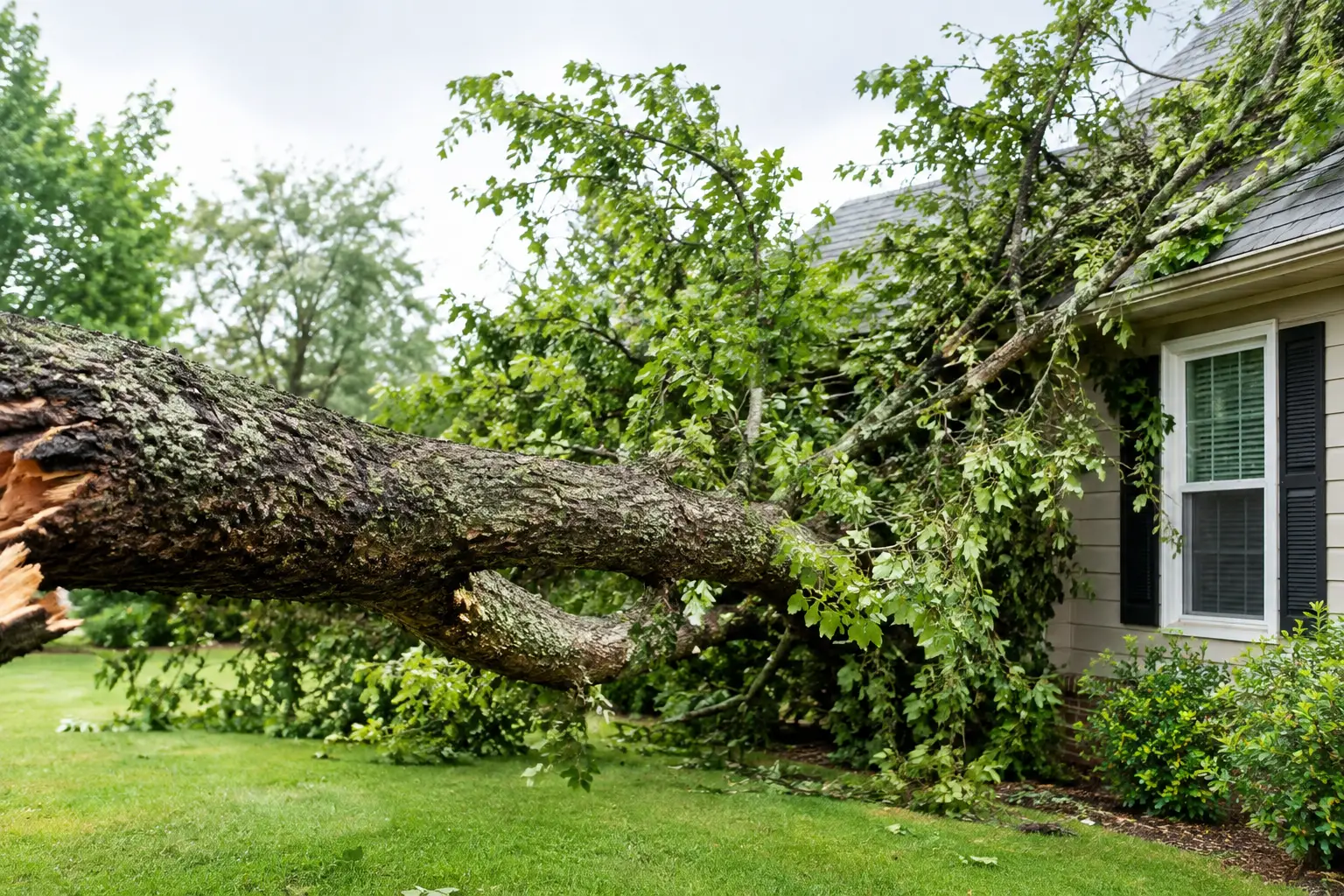
A mature oak can turn from an asset to an emergency in one storm. When a tree lands on a roof, fence, driveway, or vehicle, the first question is usually urgent: does insurance cover fallen trees? Often, it can. But payment depends less on the tree itself than on where it fell, what it damaged, why it fell, and which policy is designed to respond.
That distinction matters. A well-designed protection structure accounts for the property, vehicles, liability exposures, and the cost of restoring normal use after a sudden loss. A fallen-tree claim is a clear example of why policy details deserve attention before severe weather arrives.
Does Insurance Cover Fallen Trees on Your Property?
A standard homeowners policy commonly covers damage caused when a tree falls on a covered structure because of a covered event, such as wind, lightning, hail, or the weight of ice or snow. If a healthy tree falls during a storm and damages your house, attached garage, shed, fence, or other insured structure, the policy may help pay for repairs, subject to your deductible and policy limits.
In many cases, the policy also pays a limited amount to remove the tree when removal is necessary to repair covered damage. The key point is that tree removal is usually connected to a covered loss. The policy is not simply a maintenance fund for removing trees from a yard.
For example, if a windstorm causes a tree to fall across your roof, the roof damage and the reasonable cost to remove the tree from the roof may be covered. If the same tree falls harmlessly into an open part of the yard, there may be no coverage for cleanup, even if the removal is expensive.
Coverage can also vary based on the type of property involved. Dwelling coverage generally protects the home itself. Other structures coverage may apply to detached garages, fences, and similar structures, often with its own percentage-based limit. Personal property coverage may help if the fallen tree damages belongings, such as patio furniture or equipment stored in a shed.
Why the Cause of the Fall Changes the Claim
Insurance is designed for sudden, accidental loss, not predictable deterioration. That principle is central to fallen-tree claims.
A tree brought down by a sudden windstorm is a very different situation from a tree that was visibly dead, rotting, or leaning for months before it failed. If an insurer determines that decay, neglect, or a lack of reasonable maintenance caused the damage, coverage may be reduced or denied. Policies differ, and a claim decision depends on the policy language and the available facts, but deferred maintenance is a meaningful exposure.
This does not mean every tree must be perfectly healthy to qualify for coverage after a storm. It means property owners should treat obvious warning signs as risk-control issues. Dead branches, trunk cracks, hollow areas, fungus growth, roots lifting from the soil, and limbs overhanging the roof all warrant timely evaluation by a qualified tree professional.
There is another important nuance: some policies include special deductibles for wind, hail, hurricanes, or named storms. A claim may be covered but still produce little or no payment if repair costs do not exceed the applicable deductible. Reviewing that deductible before storm season helps avoid a difficult surprise when a loss occurs.
When a Fallen Tree Damages a Vehicle
If a tree falls on a parked car, homeowners coverage generally does not pay for the vehicle damage. That loss is usually addressed by the vehicle's comprehensive coverage, sometimes called other-than-collision coverage.
Comprehensive coverage may help pay to repair or replace a vehicle damaged by a falling tree, branch, windstorm, hail, flood, fire, or similar event, after the deductible. Liability-only vehicle coverage does not typically protect your own vehicle from this type of damage.
The location of the car does not usually change this basic rule. A tree can fall on a vehicle in your driveway, on the street, or in a parking area, and comprehensive coverage is the relevant protection. Still, the policy deductible and the vehicle's value affect whether filing a claim makes financial sense.
If the vehicle is not drivable, document its condition and follow the carrier's instructions before authorizing extensive repairs. Emergency steps to prevent further damage or move the vehicle out of danger may be necessary, but preserving evidence remains valuable.
What if a Neighbor's Tree Falls on Your House?
A neighbor's tree falling onto your property can feel like an obvious case of neighbor responsibility. Insurance law is often less straightforward.
If a healthy tree falls during a storm, your homeowners policy may respond to damage to your home, even though the tree grew on your neighbor's land. Storms are generally treated as accidental events rather than automatic proof of negligence. Your insurer may later evaluate whether another party has responsibility, but you should not delay protecting your property while waiting for that question to be resolved.
The analysis changes if the neighbor knew, or reasonably should have known, that the tree was dangerous and failed to act. Evidence of a clearly dead tree, prior warnings, documented complaints, or obvious hazardous conditions may be relevant to a liability claim. Liability is fact-specific, so avoid assumptions or confrontations in the immediate aftermath.
Take photographs from a safe distance, save any prior written communications about the tree, and report the loss promptly. Let the claim process assess responsibility. Your first priority is preventing additional damage to your home and keeping people away from unstable limbs, downed wires, and damaged structures.
Tree Removal: The Most Common Coverage Gap
Many property owners are surprised to learn that a fallen tree in the yard is not always covered. If it misses all covered property, insurers often view removal as a homeowner expense. Limited coverage may be available in certain circumstances, such as when a tree blocks a driveway intended for vehicle access or prevents access to the home, but the terms and dollar limits vary.
Tree removal limits also may apply per tree, per event, or both. That matters after widespread wind damage, when several trees fall at once. The expense can rise quickly, especially if a crane, emergency crew, or specialized equipment is needed.
Do not assume that the cost of removing a tree is the same as the cost of repairing the damaged structure. They may be handled under separate policy provisions with different limits. This is one area where reviewing the declarations page and policy endorsements before a loss can expose a gap that is otherwise easy to miss.
What to Do Immediately After a Tree Falls
A calm, documented response protects both safety and the claim. Start by keeping clear of downed power lines, leaning trees, damaged roofs, and broken utility connections. If there is an immediate threat to life or property, contact emergency services or the utility provider.
Then take these practical steps:
- Photograph and video the tree, the damaged areas, and the surrounding conditions before cleanup begins, if it is safe to do so.
- Report the claim promptly and describe the event factually, including the date, weather conditions, and visible damage.
- Make reasonable temporary repairs to prevent further loss, such as covering an opening in the roof, but retain receipts and photographs.
- Do not authorize major demolition, disposal, or permanent repairs until the insurer has had an opportunity to assess the damage, unless emergency conditions require it.
If a contractor is needed urgently, verify their credentials and obtain written estimates. After a storm, high-pressure solicitations and inflated promises are common. A careful response is part of protecting the claim and the property.
Build Tree Risk Into Your Protection Plan
Fallen trees are not merely a landscaping concern. They sit at the intersection of home maintenance, weather risk, vehicle protection, neighbor liability, and deductibles. The best time to clarify those connections is before branches are on the roof.
Review the limits for your home, other structures, personal property, and temporary living expenses. Confirm whether your vehicles carry comprehensive coverage. Examine wind or hurricane deductibles where relevant, and ask how tree removal is treated under your specific policy. A periodic property review should also include the physical landscape, especially large or aging trees near structures, driveways, and utility lines.
Shield Pro Insurance approaches this as the Architecture of Protection: coverage and risk control working together rather than existing as separate decisions. A tree inspection today may prevent a claim tomorrow. And when a storm still causes damage, a clearly designed policy can provide the foundation for a faster, more confident recovery.