
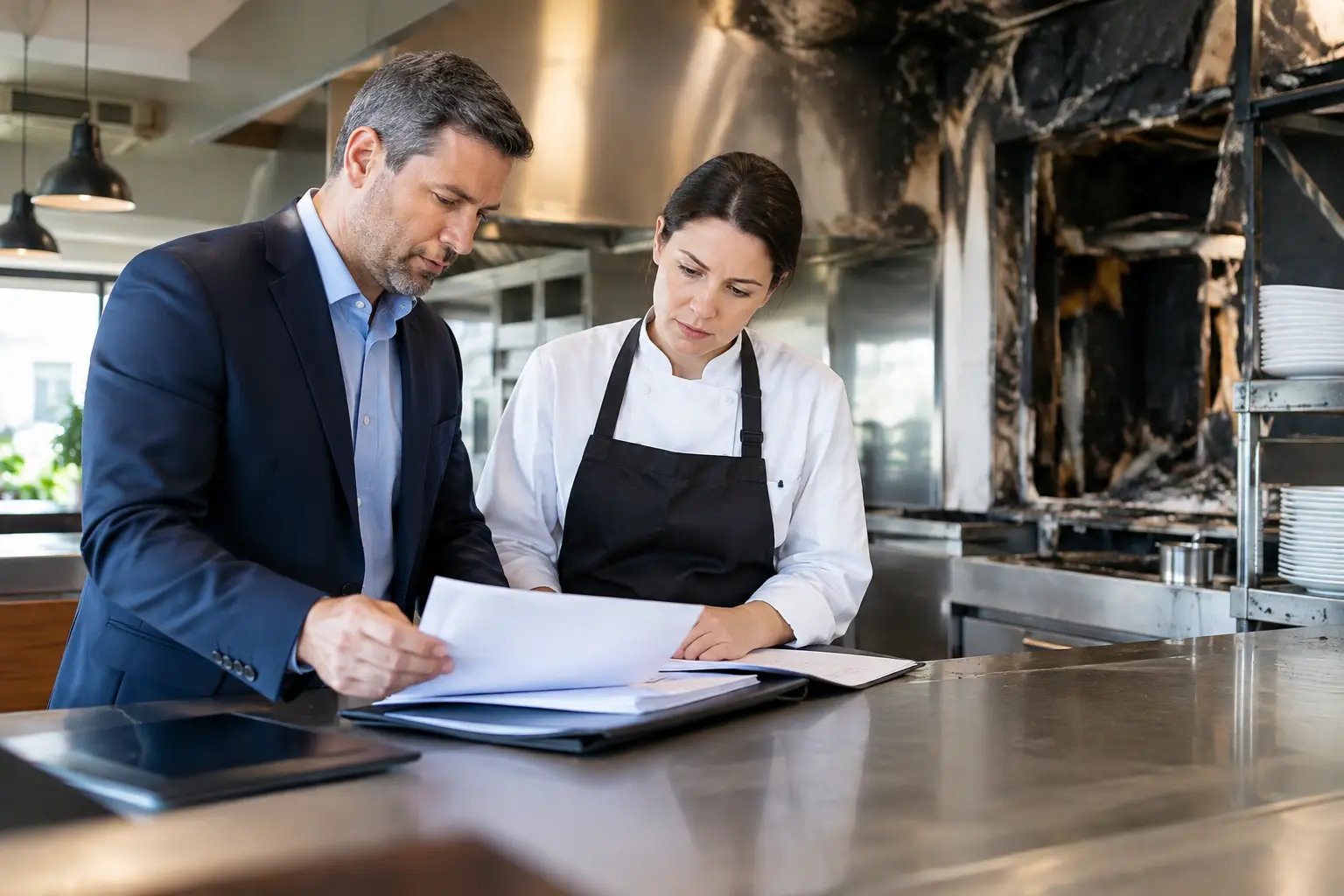
A fire can turn a functioning restaurant into a restricted scene in a matter of minutes. Once everyone is safe and emergency responders have released the premises, a restaurant fire insurance claim becomes the framework for protecting the property, preserving records, and making sound decisions before repair work and reopening plans begin.
The strongest claim response is not rushed. It is organized around evidence, safety, mitigation, and a clear reading of the policy. Restaurants carry a concentration of risk in a relatively small footprint: heat-producing equipment, grease systems, electrical loads, food inventory, refrigeration, customer areas, and a daily dependence on uninterrupted operations. Fire damage often extends well beyond what is visibly burned.
Secure the Site Before You Solve the Claim
Life safety comes first. Do not reenter until fire officials or the appropriate authority have permitted access. Even after flames are out, a site can contain structural instability, electrical hazards, contaminated water, damaged gas lines, and smoke conditions that require professional handling.
Once entry is authorized, take reasonable steps to prevent additional damage. This may include boarding openings, protecting exposed areas from weather, securing valuable equipment, and arranging emergency drying or water removal. Keep every receipt, work order, invoice, and contractor contact associated with these actions. Policy language commonly requires the policyholder to protect property from further damage, but the work should be limited to emergency stabilization until the carrier has had an opportunity to inspect.
Do not dispose of damaged equipment, food, furnishings, packaging, or building materials simply because they appear beyond use. Photograph and inventory them first, and preserve them when practical. A damaged hood system, refrigerator, point-of-sale terminal, or set of dining-room furnishings can help establish the scope and cause of the loss.
Start the Restaurant Fire Insurance Claim Promptly
Report the loss to the carrier or your insurance professional as soon as possible. Early notice opens the claim, begins the inspection process, and gives you a point of contact for questions about emergency expenses and documentation. Provide accurate facts, but avoid guessing about cause, repair cost, or the length of closure before qualified parties have assessed the site.
Create one central claim file. It can be a labeled digital folder with a matching paper file for original documents. Record the claim number, adjuster contact details, dates of all calls, names of vendors, and a short recap of every material conversation. This simple discipline prevents a common problem: details that were clear during the first stressful days becoming difficult to reconstruct weeks later.
A complete initial file should include photos and video from every accessible area, a written timeline of the event, fire or incident reports when available, pre-loss photos of the space, and maintenance records for relevant systems. Preserve reports related to suppression equipment, hood cleaning, electrical service, and fire alarms. These records may help clarify the loss and the condition of the property before the event.
Document More Than Fire Damage
Visible charring is only one component of a fire loss. Smoke can penetrate ceilings, wall cavities, upholstery, dry storage, electronics, and ventilation systems. Water used in suppression efforts can damage flooring, drywall, inventory, wiring, and refrigerated equipment. Soot may make food, packaging, uniforms, and customer-facing materials unusable even when they are not burned.
Walk the premises systematically, if it is safe to do so. Photograph wide views first, then take closer images of each affected asset. Include serial numbers, model numbers, and identifying labels on kitchen equipment. For food and beverage inventory, retain purchase invoices, inventory counts, distributor statements, and photographs of items that must be discarded.
Do not overlook less obvious expenses. A restaurant may face costs for debris removal, specialized cleaning, equipment testing, temporary security, permit requirements, and code-related changes during rebuilding. Whether and how these costs are covered depends on the specific policy, limits, endorsements, exclusions, and the facts of the loss. Documenting them early gives the claim a more accurate foundation.
Separate the Loss Into Clear Categories
A well-organized restaurant fire insurance claim distinguishes between different types of financial impact rather than combining everything into one estimate. Property damage may involve the structure, tenant improvements, furniture, fixtures, kitchen equipment, signage, and stock. Some property may be owned, while other equipment may be leased, financed, or supplied by a vendor. The ownership arrangement matters when preparing documentation and communicating with the parties involved.
There may also be income loss caused by a necessary suspension of operations. Restaurants should maintain records that show normal sales patterns, payroll, recurring expenses, reservations, catering commitments, seasonal variations, and recent financial statements. Point-of-sale reports, sales tax filings, merchant processing records, payroll records, supplier invoices, and bank statements can help establish the financial baseline before the fire.
Extra costs incurred to reduce the period of closure should be tracked separately. Examples can include temporary equipment, alternate food preparation arrangements, accelerated shipping, or temporary relocation expenses. Not every expense will be covered, and approval may be needed before committing to major costs. Still, maintaining a clean record of why each expense was necessary gives the adjuster a clearer basis for review.
If smoke, water, or fire spread to another occupied space, or if a customer or vendor alleges injury or property damage, preserve any notice, demand, photographs, or contact information related to that allegation. Do not admit fault or attempt to negotiate liability personally. Forward the information promptly through the claim channel so it can be handled under the applicable policy provisions.
Work With the Adjuster Without Losing Control of the Record
The adjuster’s inspection is a major checkpoint, not the end of the process. Be prepared to walk through the property, identify damaged areas, and share your records. Ask what additional documentation is needed, what deadlines apply, and whether the carrier requires a formal proof of loss. Put follow-up requests and material answers in writing when possible.
Obtain detailed repair estimates from qualified contractors, particularly for restaurant-specific systems such as ventilation, suppression equipment, refrigeration, electrical work, plumbing, and food-service equipment. Lowest price is not always the right measure. The estimate should identify the scope of work, materials, labor, code-related items, and any assumptions. A vague estimate can create disputes later when hidden damage or required repairs emerge.
Be cautious about beginning permanent reconstruction before the scope is documented and approved. Waiting can feel difficult when revenue has stopped, but uncoordinated work can make it harder to establish what was damaged or whether a cost was necessary. Emergency mitigation is different. The goal is to stop further damage while preserving the evidence needed for a fair evaluation.
Reopening Is a Risk Decision, Not Just a Repair Date
Reopening too early can create a second loss. Before resuming service, confirm that the premises have appropriate approvals, utilities are safe, fire protection systems are restored, equipment has been inspected, and food safety requirements have been met. A partial reopening may be appropriate in some circumstances, but only when the available area and operations can be conducted safely and lawfully.
This is also a useful moment to evaluate whether the prior protection structure matched the real operation. Changes made during rebuilding can affect property values, equipment schedules, revenue assumptions, liability exposures, and the cost of future loss. Replacement cost, ordinance-related protection, equipment values, and income-loss limits should be considered as connected design elements, not isolated line items.
Shield Pro Insurance approaches this work as the Architecture of Protection: a coordinated structure built around the assets, obligations, and operational realities that deserve to withstand disruption. After a fire, careful claim management protects the present. Thoughtful coverage design helps protect the next chapter.
A disciplined file, prompt communication, and careful decisions in the first days after a fire can preserve options when they matter most. The objective is not merely to reopen the doors. It is to reopen on a sounder, better-documented foundation.