
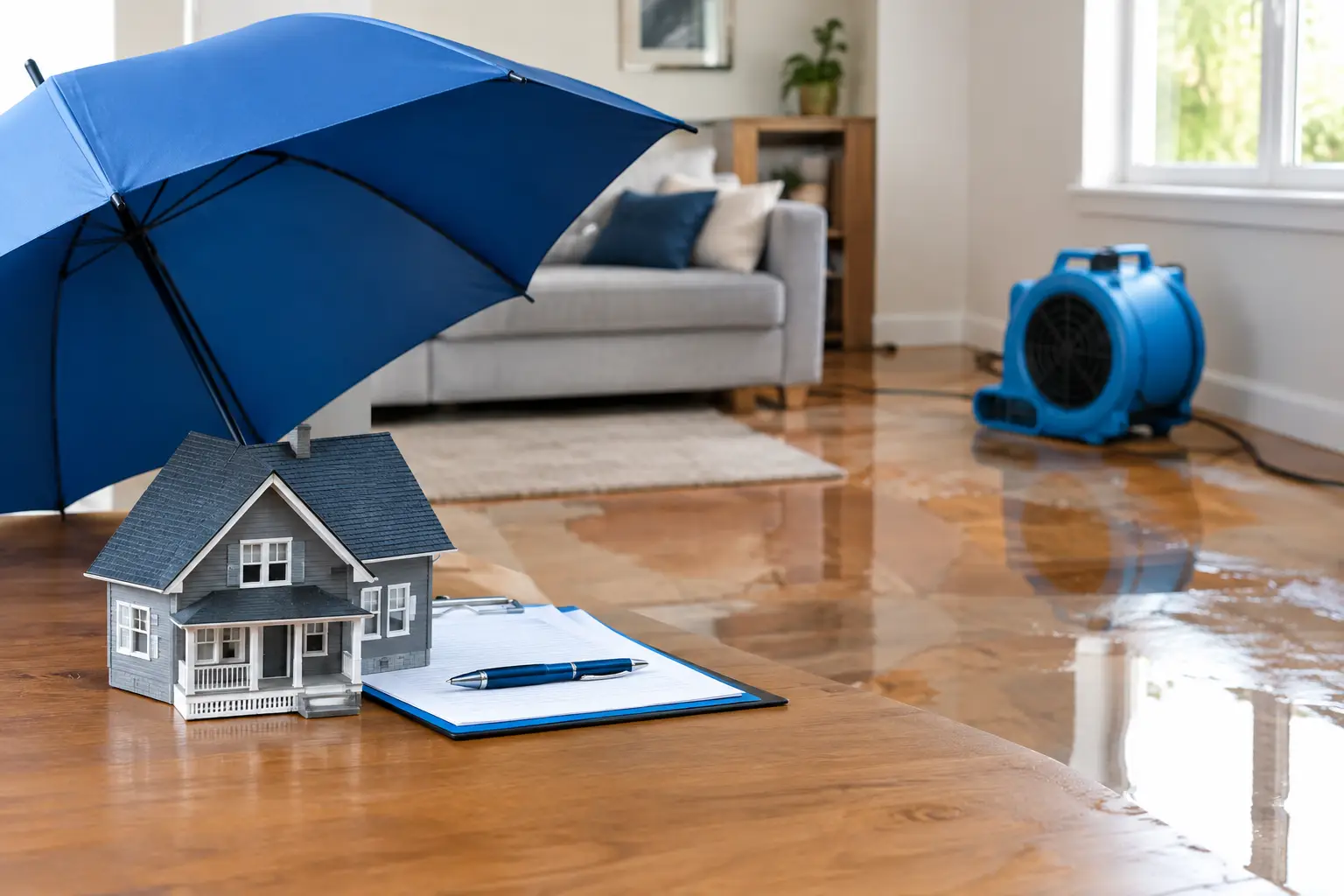
A burst supply line can damage flooring, cabinets, drywall, and personal property in a matter of hours. A water damage insurance guide begins with one principle that shapes nearly every claim: coverage usually depends less on how much water entered the property than on where it came from, how it entered, and whether the damage was sudden or developing over time.
That distinction is not a technicality. It is the structural line between a covered loss, a limited loss, and an expense that remains with the property owner. Thoughtful protection starts before an emergency, with policy terms, limits, endorsements, and maintenance responsibilities arranged to match the property’s real exposures.
Water Damage Insurance Guide: Start With the Source
Standard homeowners, renters, and condominium policies commonly respond to sudden and accidental discharge or overflow of water from a plumbing system, heating system, appliance, or fire-protection system. A pipe that unexpectedly bursts, a washing machine hose that fails, or an upstairs toilet that overflows may trigger coverage for resulting property damage, subject to the deductible and policy language.
The resulting damage matters as much as the failed component. A policy may pay to repair soaked walls, flooring, and furnishings, while placing limits on the cost to repair or replace the worn pipe, hose, or appliance that caused the loss. The failed item and the damage it caused are not always treated the same way.
Coverage often becomes less certain when water enters from outside the structure. Rain driven through a storm-damaged roof may be covered if a covered peril caused the opening. Water that rises across the ground, overflows a creek, or enters after heavy rainfall is generally considered flood and typically requires separate flood coverage. A weather event does not automatically make every form of water intrusion covered.
Sewer and drain backup is another frequent gap. Water that backs up through a sewer, drain, or sump pump can cause severe damage, yet many policies require a specific water backup endorsement for that loss. The endorsement limit deserves attention. A modest limit can be inadequate when finished basements, built-in cabinetry, flooring, and stored belongings are involved.
Sudden Events Versus Long-Term Deterioration
Insurance is designed for fortuitous loss, not routine wear, deferred upkeep, or conditions that should have been corrected over time. That is why gradual seepage, repeated leakage, rot, corrosion, and long-term moisture damage are commonly excluded or restricted. A slow leak behind a wall may remain unnoticed for months, but the duration can still affect the claim.
Mold follows a similar pattern. If mold results from a covered, sudden water event and the affected area is addressed promptly, limited coverage may be available. If it stems from prolonged humidity, an old leak, or delayed drying, coverage may be excluded. The practical lesson is straightforward: investigate moisture quickly and retain records showing when the issue was discovered and how it was mitigated.
This does not mean every claim involving an older plumbing system will be denied. Policies differ, and the facts matter. It does mean property owners should avoid assuming that visible water is enough, by itself, to establish coverage.
Read the Policy as a Protection Design
A water claim can touch several parts of a policy. Dwelling coverage may apply to the house or other covered structures. Personal property coverage may apply to furniture, electronics, clothing, and other belongings. Loss-of-use coverage may help with additional living expenses when a covered loss makes the residence unfit to occupy. For condominium owners, the dividing line between the association’s responsibility and the unit owner’s responsibility is especially important.
The declaration page is a useful starting point, but it is not the whole design. Review the deductible, dwelling limit, personal property limit, settlement basis, special limits, exclusions, and endorsements. Replacement cost coverage generally provides stronger protection for eligible damaged property than actual cash value, which accounts for depreciation. Even with replacement cost coverage, payment may occur in stages and depend on completing repairs or replacing items within the policy’s stated time frame.
Pay particular attention to four areas that often determine whether protection is adequate:
- Water and sewer backup coverage, including the limit and deductible that apply.
- Flood protection, especially for properties exposed to surface-water runoff, drainage issues, or nearby waterways.
- Ordinance or law coverage, which can help when current building codes increase the cost of a covered repair.
- Personal property documentation and valuation, particularly for higher-value items or extensive stored belongings.
A policy should be reviewed after renovations, a finished basement, a major purchase, a change in occupancy, or installation of systems such as a water heater, sump pump, or smart leak detector. Each change can alter the cost and complexity of a future loss.
What to Do in the First Hours After Water Damage
The first priority is safety. If water is near electrical outlets, appliances, or a panel, avoid the area and seek qualified help. If it is safe to do so, stop the source by shutting off a local valve or the main water supply. Do not enter standing water when electrical hazards may be present.
Next, report the loss promptly and document conditions before extensive cleanup begins. Take photos and video of the source, affected rooms, damaged contents, and the water line on walls or furnishings. Keep damaged items until the carrier or adjuster advises otherwise, unless they create a health or safety concern. Maintain a file with receipts, contractor estimates, mitigation invoices, claim communications, and a simple timeline of what occurred.
Reasonable emergency measures are usually expected. Extracting water, placing fans or dehumidifiers, moving dry items out of harm’s way, and arranging professional mitigation can prevent additional damage. At the same time, do not authorize broad reconstruction work without understanding the scope, estimate, and claims process. Emergency stabilization and permanent repair are related but distinct stages.
For a claim involving a neighbor, a shared wall, or a condominium building, notify the appropriate parties quickly. Responsibility can depend on the governing documents, the source of the water, negligence, and the applicable policies. Do not assume that the unit below, the association, or the neighbor will automatically absorb the loss.
Avoid Gaps Before the Next Leak
Water losses reward preparation because small decisions made in advance have outsized value under pressure. Know where the main water shutoff is and make sure responsible household members can operate it. Replace aging supply hoses, maintain appliances and water heaters, clean gutters and drainage paths, and address recurring plumbing concerns rather than treating them as cosmetic inconveniences.
A monitored leak-detection device can add another layer of protection, particularly in second homes, vacant properties, and homes with finished lower levels. It is not a substitute for coverage, but early detection can reduce the scale of damage dramatically. For some properties, automatic shutoff capability is worth evaluating.
Shield Pro Insurance approaches coverage as the Architecture of Protection: a coordinated structure built around the way a property is owned, used, maintained, and exposed. The goal is not to predict every leak. It is to ensure that the policy responds as intended when an unexpected event threatens what you have built.
The right time to study a water loss is not while flooring is being removed and a restoration crew is waiting for direction. A clear policy review, realistic limits, and a practiced response plan create steadiness when water damage turns an ordinary day into an urgent decision.